
GDA Money Explorers Part 1: What Is Money and Why Do We Use It?
Helping Young Minds Learn Big Money Lessons.
Have you ever wondered why we use coins and notes to buy things? Or why people work to earn money in the first place?
Welcome to Money Matters, a series that will help you become a financial superhero! Over the next few posts, we'll explore saving, spending, budgeting, banks and even how businesses work. But first, let's start with the basics: what is money?
Imagine a World Without Money...
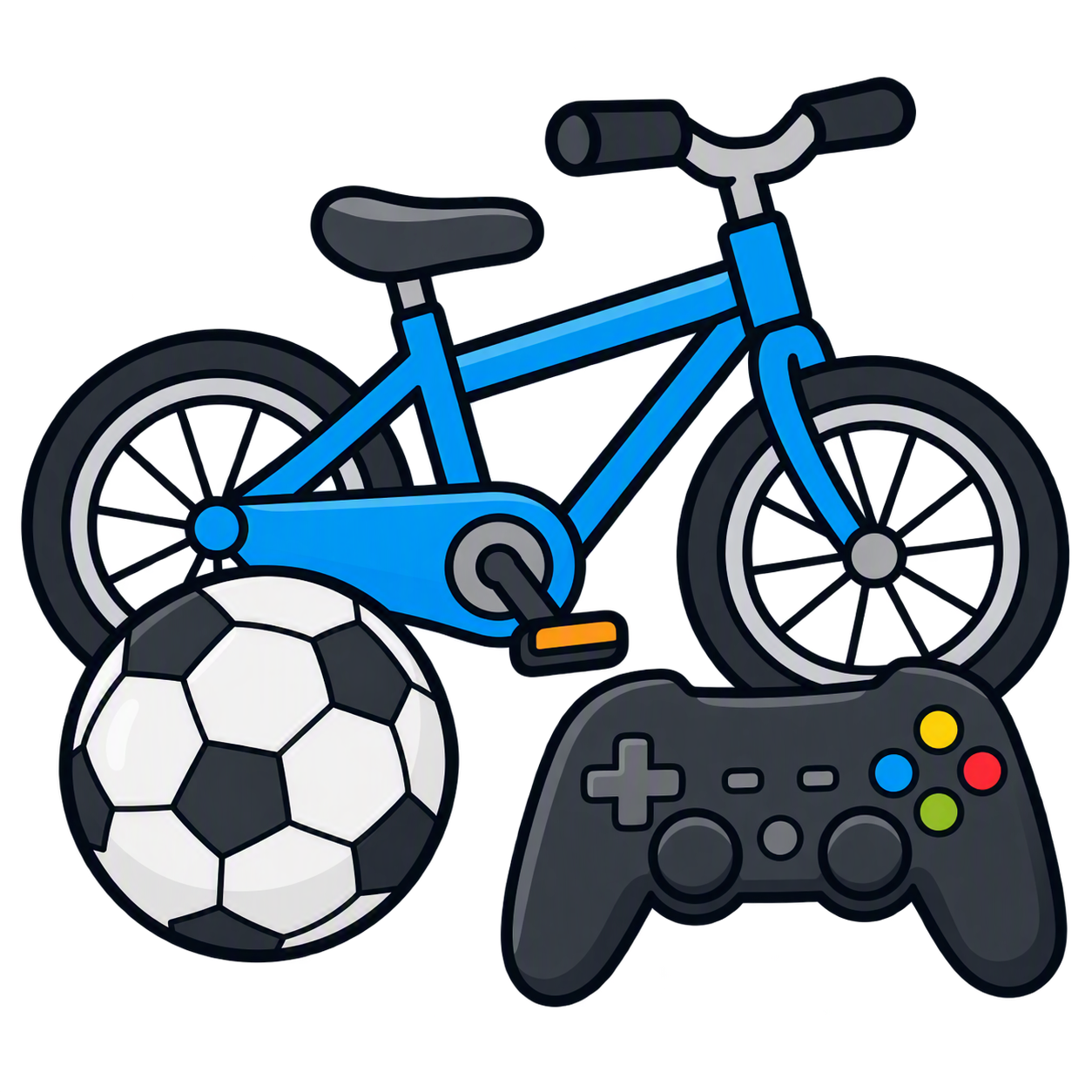
Picture this.
You have a bicycle that you no longer use, and you'd like to swap it for a football. You find someone who has a football but they don't want a bicycle. Instead, they want a computer game.
Now you have a problem!
A long time ago, people used a system called bartering. They swapped one thing for another. It worked sometimes, but it could be tricky because both people had to want what the other person had.
Money was created to make trading easier.
So, What Is Money?
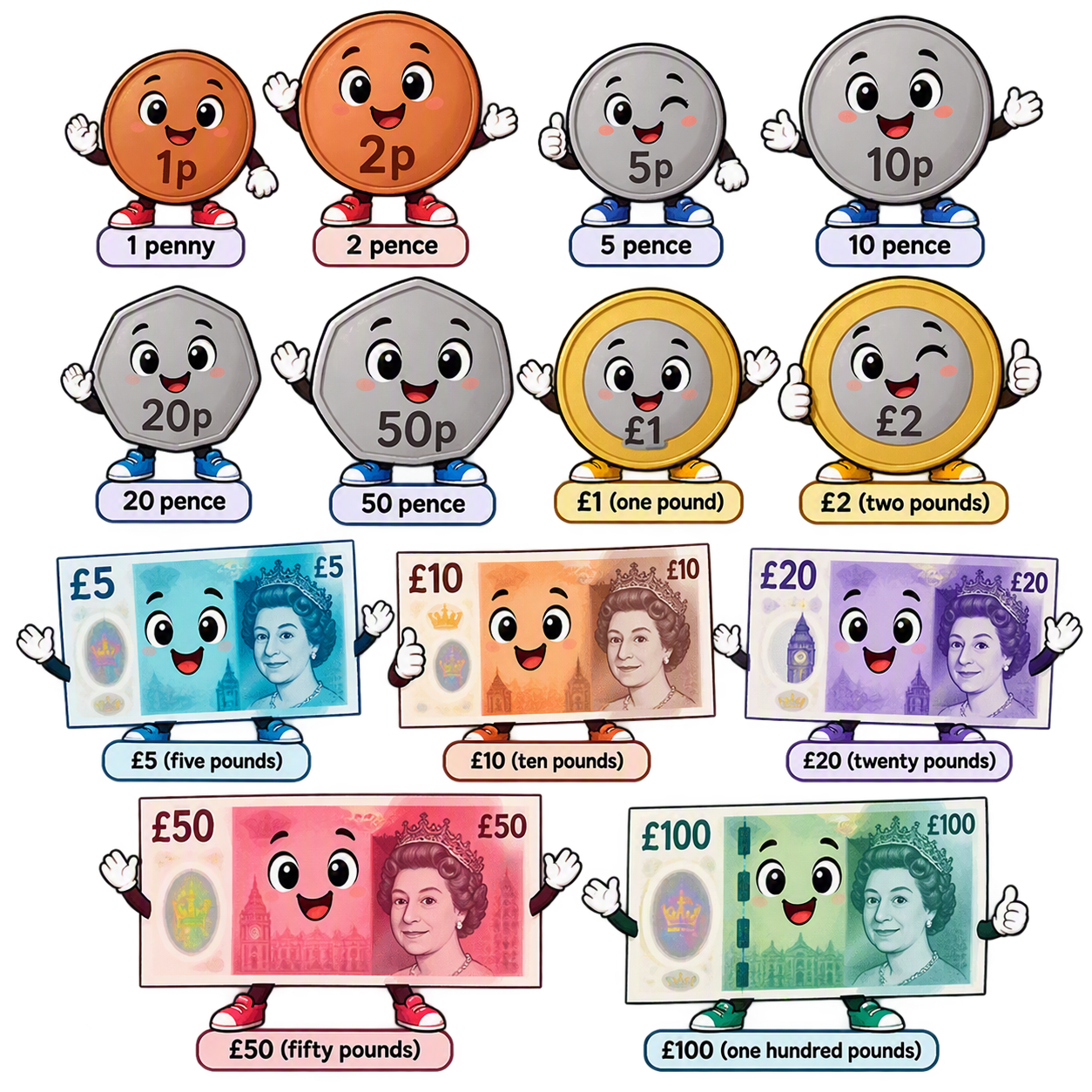
Money is something that people agree has value. We can use it to buy goods (things) and services (jobs that people do for us).
Money is something that people agree has value. We can use it to buy goods (things) and services (jobs that people do for us).
For example:
Buying a sandwich at lunch
Paying for a haircut
Purchasing a new football
Going to the cinema
Money is something that people agree has value. We can use it to buy goods (things) and services (jobs that people do for us).
For example:
Buying a sandwich at lunch
Paying for a haircut
Purchasing a new football
Going to the cinema
In the UK, money comes in different forms:
Coins (1p, 2p, 5p, 10p, 20p, 50p, £1 and £2)
Notes (£5, £10, £20 and £50)
Digital money, which is stored in bank accounts and used through cards or apps
Where Does Money Come From?
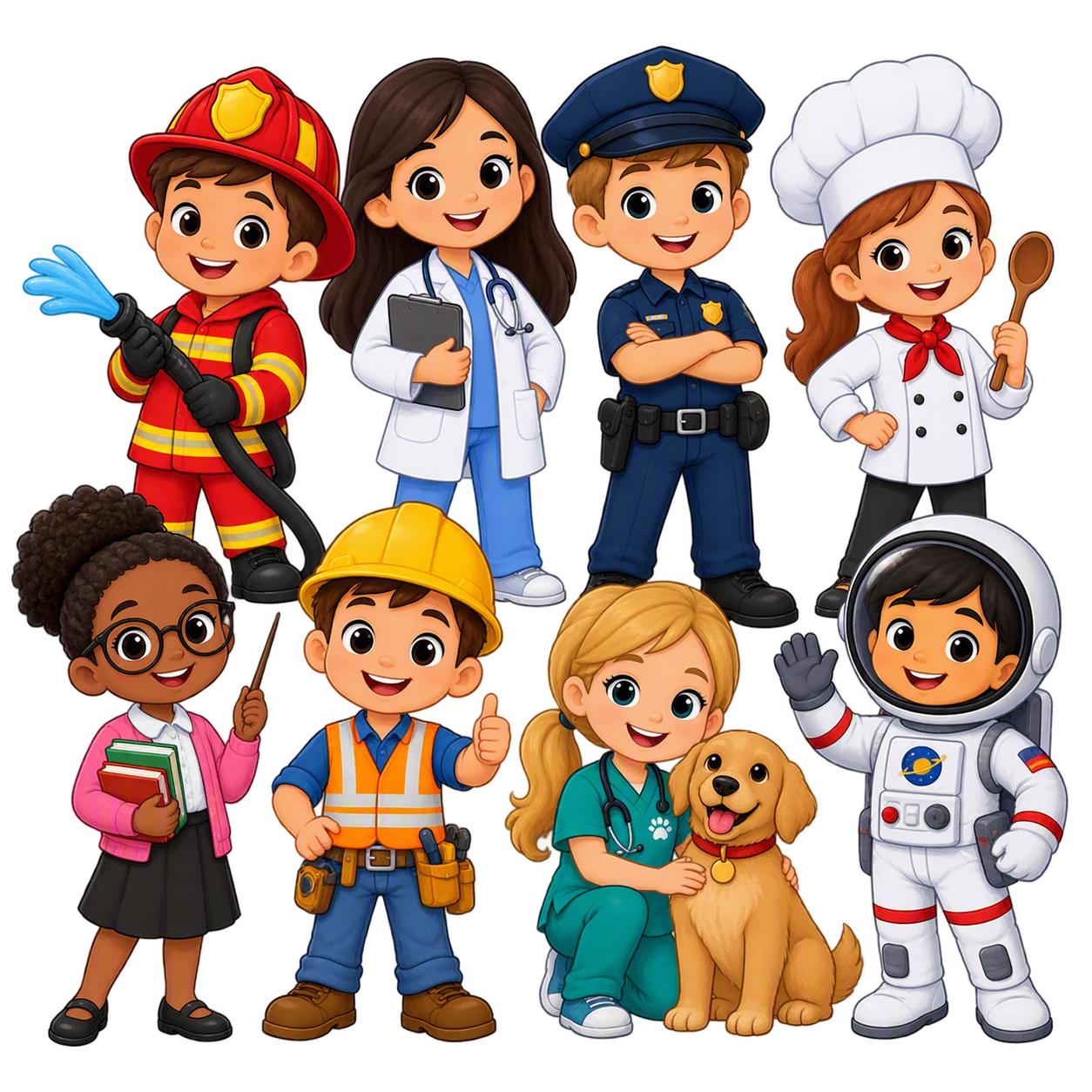
Most adults earn money by working.
People use their skills to help others and get paid in return. For example:
Teachers help children learn.
Nurses help people stay healthy.
Builders create homes and schools.
Shop workers help customers find what they need.
The money they earn is called an income.
Some children also earn small amounts of money by helping at home, doing extra chores or receiving pocket money.
What Happens When We Get Money?
When we receive money, we usually have three choices:
1. Spend It
Spending means using money to buy something now.
For example:
A comic
Sweets
A new football sticker pack
Spending can be fun, but if we spend all our money straight away, we may not have enough later for something bigger.
2. Save It
Saving means keeping money for the future.
Imagine you want a new bike that costs £120. If you only have £20 today, saving allows you to slowly build up enough money to buy it.
Many people save money in a bank account, but children might also use a savings jar or savings account designed for young people.
3. Share It
Some people choose to use part of their money to help others.
This might mean:
Donating to charity
Supporting a community project
Buying a gift for someone
Sharing can make a positive difference and help people who need support.
The Superpower of Saving
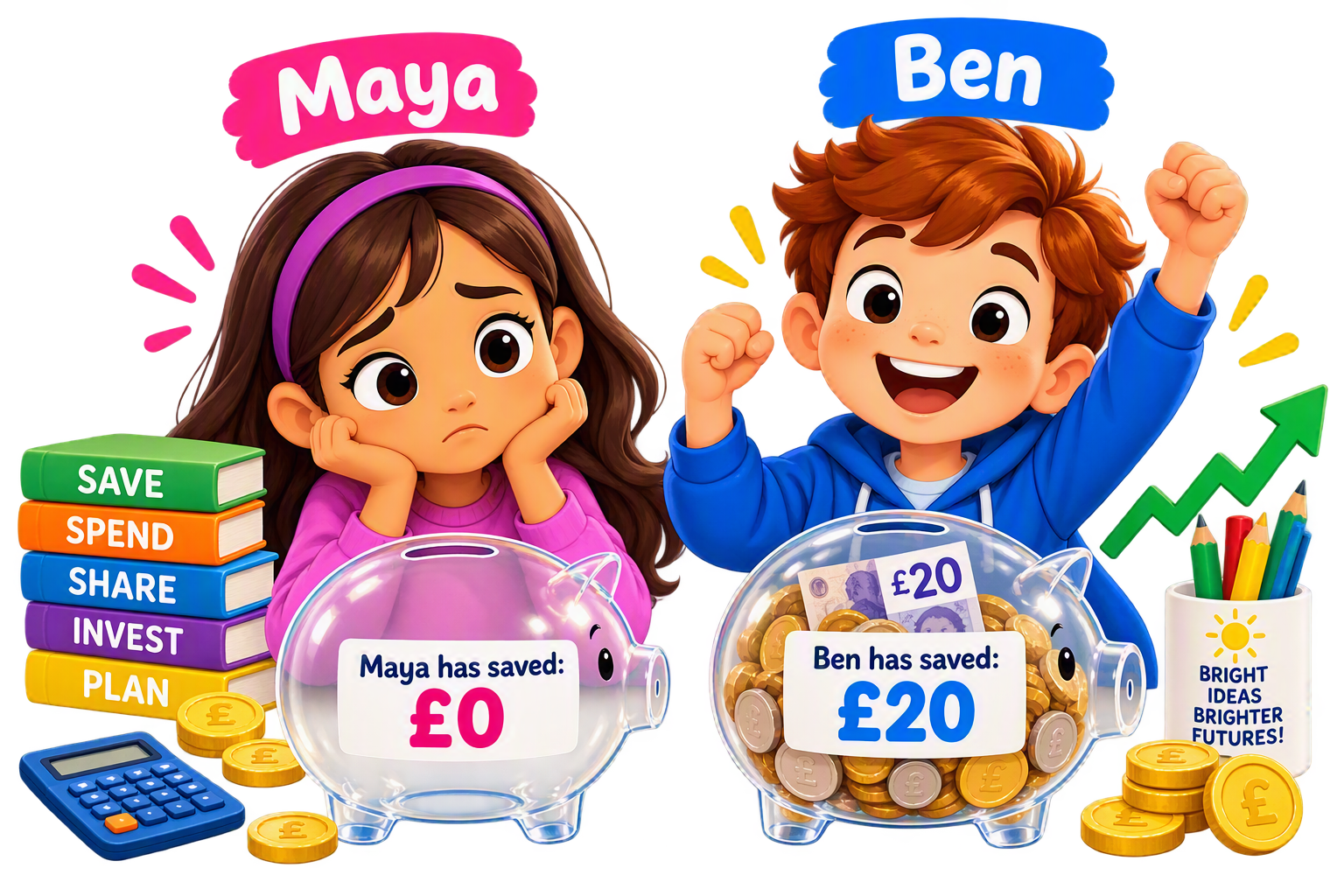
Let's meet two friends, Maya and Ben.
Both receive £5 each week.
Maya spends all £5 every week.
Ben spends £3 and saves £2.
After 10 weeks:
Maya has saved £0.
Ben has saved £20.
Ben now has the choice to buy something larger that Maya cannot afford yet.
Does this mean Maya is wrong? Not at all. But it shows how small savings can grow over time.
Saving gives us more choices in the future.
Money Challenge
Try this simple challenge:
For one week, write down everything you spend money on.
At the end of the week, ask yourself:
What did I really enjoy buying?
What could I have skipped?
Could I have saved a little?
You might be surprised by what you discover!
Key Words to Remember
Money: Something we use to buy goods and services.
Income: Money that a person earns.
Spend: To use money to buy something.
Save: To keep money for later.
Budget: A plan for how to use your money wisely.
What's Coming Next?
In our next Money Matters post, we'll answer a big question:
How can you create a simple budget and make your money last longer?
We'll discover how financial superheroes plan ahead and make smart choices with their money!
Think About It: If someone gave you £20 today, how much would you spend, save and share? Why?
This article is for general information only and does not constitute financial advice.