
Do you feel financially safe?
For many of us, our income is what keeps everyday life moving. It pays the mortgage or rent, covers household bills, puts food on the table and allows us to save for the future. Yet while we routinely insure our homes, cars and other valuable possessions, our ability to earn an income can sometimes be overlooked.
The latest Profile of an Income Protection Customer report from the Income Protection Task Force (IPTF), produced in collaboration with Iress, highlights an encouraging change in attitudes towards income protection, particularly among younger generations. The research, based on nearly 55,000 income protection applications, found that overall applications increased by 7% during 2025, while application volumes have risen by 56% since 2022.
One of the most interesting trends is the changing age profile of people arranging cover. According to the report, 88% of customers purchasing income protection through a multi-benefit protection plan were aged 45 or under, with 26 to 35 the most common age range. This suggests that younger adults are increasingly considering how they would manage financially if illness or injury prevented them from working.
“41% of UK adults feel financially protected if something unexpected happens, but only 19% actually have adequate cover.”
Although engagement is increasing, there is still a considerable difference between feeling financially secure and actually having sufficient protection in place. The IPTF research found that 41% of UK adults feel financially protected if something unexpected happens, but only 19% actually have adequate cover. It also found that 76% of people have no income protection at all, while more than 85% of income protection needs in the UK remain unmet.
This protection gap matters, because an unexpected period away from work can quickly put pressure on household finances. Savings may provide a valuable emergency buffer, and some employees have access to sick pay through their employer. However, it can be worth considering how long those resources would realistically support your normal expenditure if you were unable to work for an extended period.
This can be particularly important for homeowners. The IPTF report found that the average income protection benefit remains more than £1,200 below the average monthly expenditure of mortgage-holding households.
It raises a useful question. If your income stopped tomorrow because you were unable to work due to illness or injury, how long could you continue meeting your normal financial commitments?
For many households, the mortgage is only part of the picture. Council tax, utilities, food, childcare, transport, insurance and other regular spending will continue even when an individual's earnings reduce or stop. Income protection is designed to provide a regular income if you are unable to work because of illness or injury, subject to the terms and conditions of the policy. Rather than providing a one-off lump sum, it can help replace a proportion of lost earnings, giving you additional financial support while you are unable to work.
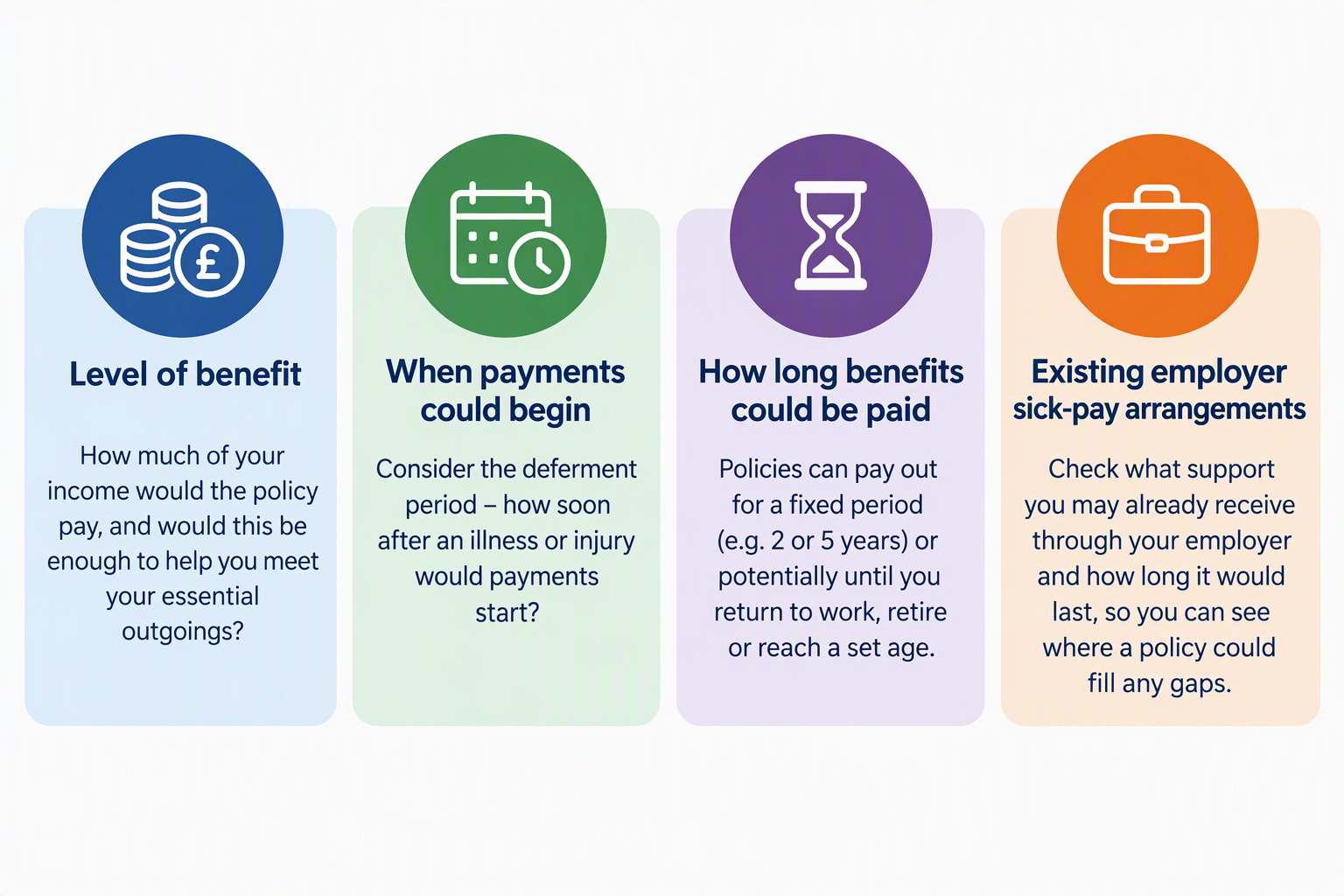
The appropriate policy will depend on your individual circumstances. Factors such as the level of benefit, how soon payments could begin, how long benefits could potentially be paid and any existing employer sick-pay arrangements should all be considered when looking at suitable cover. Importantly, protection isn't necessarily an all-or-nothing decision. A conversation with an adviser can help establish where the greatest financial vulnerability lies and what level of protection is appropriate and affordable.
Income protection is ultimately about resilience rather than expecting the worst. None of us can predict whether illness or injury will prevent us from working in the future. But we can consider what the financial consequences might be and put appropriate plans in place.
At GDA Financial Partners, we can help you review your existing protection, identify potential gaps and consider whether income protection could form part of your wider financial plan.
The aim is simple: to help make sure that if life doesn't go to plan, your finances are better prepared for it.
This article is for general information and does not constitute personal financial advice. If you’re unsure what’s best for you, seek independent financial advice.